

Date 日期
19 March 2026 (Thursday)
2026年3月19日(星期四)
Time 時間
09:00 AM – 5:00 PM
上午九時 至 下午五時
Venue 地點
E-P-04,
Tai Po Campus, The Education University of Hong Kong
香港教育大學大埔校園E-P-04
Language 語言
Chinese (Putonghua) supplemented with English
中文(普通話)輔以英文
Highlight Video | 精彩瞬間視頻
Slideshow Video | 精彩照片視頻
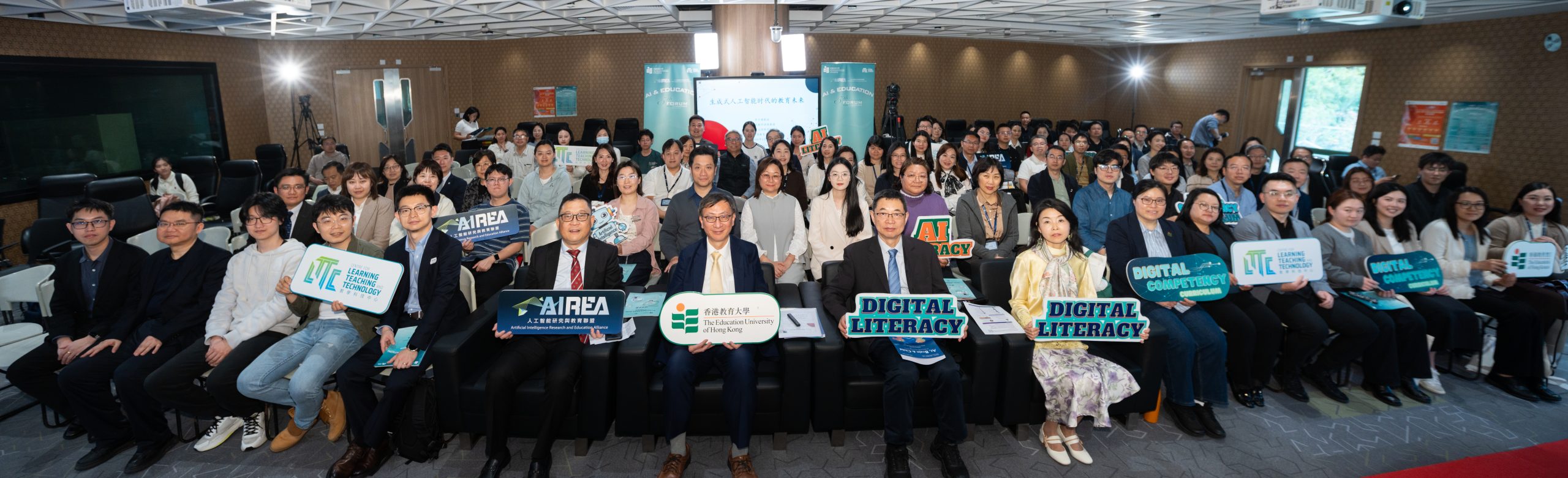
^ Group photo of delegates and invited speakers of AIREA 5th AI and Education Forum
EdUHK hosts the 5th Artificial Intelligence and Education Forum Announces the Establishment of the “Robotics and Embodied Intelligence Laboratory”
教大舉辦第五屆「人工智能與教育論壇」宣佈成立「機器人與具身智能實驗室」
The Education University of Hong Kong (EdUHK) today (19 March ) held the Fifth Artificial Intelligence and Education Forum at its Tai Po campus, attracting over 100 representatives from academia, industry, government departments, and schools to explore how artificial intelligence is reshaping the educational ecosystem. During the forum, EdUHK announced the establishment of the Robotics and Embodied Intelligence (REI) Laboratory to drive educational innovation in Hong Kong and the Greater Bay Area.
The opening ceremony was officiated by Professor Xu Guandong, Assistant Vice President (Artificial Intelligence and Education Innovation), Chair Professor of Artificial Intelligence, and Director of the University Research Facility of Data Science and Artificial Intelligence at EdUHK, who delivered the welcome address. Professor Xu noted that artificial intelligence is profoundly transforming educational models. He said the REI Laboratory will focus on research in AI and digital competencies, nurture innovative thinking among teachers and students, and strengthen collaboration among industry, academia, and research sectors to facilitate the practical application of technologies.
The forum featured keynote speeches, invited talks, industry sharing sessions, and panel discussions. Professor John Lee Chi-Kin, President of EdUHK, delivered a keynote speech titled “The Future of Education in the Era of Generative Artificial Intelligence,” examining human–AI collaboration and ethical issues in light of global trends and the University’s practices. Professor Yang Zongkai of Central China Normal University gave a speech titled “Educational Transformation and Development in AI Era,” analysing the transformation of smart education from a national strategic perspective. Professor Yan Zi, Head of the Department of Curriculum and Instruction at EdUHK, presented “Revisiting Adaptive Learning: Empowering Students in an AI-Driven Learning Environment” and demonstrated in real time through EdUHK’s EASE (Efficient Adaptive System for Education) platform how AI can enable large-scale personalised learning.
Invited Speaker Professor Song Yanjie from the Department of Mathematics and Information Technology at EdUHK delivered a talk titled “Enhancing Students’ Emotional Well-being through an AI-Powered app — EmoCare,” showcasing how AI can analyse students’ journals and generate therapeutic content. Dr Sun Daner from the same department presented “Reflections and Practices on the Application of Artificial Intelligence in Teaching Scenarios,” reviewing the development of the field and highlighting cutting-edge achievements.
In the industry sharing session, Dr Zheng Fan, Senior Director of Curriculum and Research at UBTech, introduced the application of humanoid robots across educational scenarios. Mr Shi Caoli, Solution Director of Seewo K12 Business Unit, shared practical experiences of applying artificial intelligence in teaching contexts.
The panel discussion was moderated by Professor Susanna Yeung Siu-Sze, Associate Vice President (Academic Quality Assurance) and Professor of Department of Psychology at EdUHK, together with Professor Yan Zi. Three EdUHK scholars explored topics including AI-assisted feedback, dynamic modeling of communities of inquiry, and the application of multimodal generative AI in K–12 science education.
EdUHK will continue to promote innovation in education and technology through forums, workshops, and collaborative projects. Leveraging the REI Laboratory as a platform, the University aims to bring together academia, industry, and policymakers to jointly explore the potential of artificial intelligence and robotics in education.
香港教育大學(教大)今日(3月19日)於大埔校園舉行第五屆「人工智能與教育論壇」,吸引逾百名學術界、業界及政府部門的代表出席,共同探討人工智能如何重塑教育生態。論壇期間,教大宣佈成立「機器人與具身智能(Robotics and Embodied Intelligence, REI)實驗室」,推動香港及大灣區教育創新發展。
論壇開幕儀式由教大助理副校長(人工智能與教育創新)、人工智能講座教授兼數據科學與人工智能中心實驗室總監徐貫東教授主持並致歡迎辭。徐教授表示,人工智能正深刻改變教育模式,REI實驗室將專注於人工智能與數碼能力的研究,並培養教學生的創新思維,未來更會加強產學研合作,推動技術落地應用。
論壇設有多場主旨演講、特邀演講、行業分享以及專題討論。教大校長李子建教授發表題為「生成式人工智能時代的教育未來」的主旨演講,結合全球趨勢及教大實踐,探討人機協作及倫理議題。華中師範大學楊宗凱教授以「智能時代的教育發展與變革」為題演講,從國家戰略層面剖析智能教育轉型。教大課程與教學學系主任晏子教授以「自適性學習:在人工智能驅動的學習環境中賦能學生」為題,透過教大EASE(Efficient Adaptive System for Education)易學平台一邊即時示範,一邊闡述人工智能如何實現大規模個人化學習。
特邀演講嘉賓包括教大數學與資訊科技學系宋燕捷教授,她以「通過人工智能應用提升學生情緒健康——EmoCare」為題,展示如何利用AI分析學生日記並生成療癒內容;同系孫丹兒博士則分享題為「人工智能教育研究全景圖—演進脈絡與前沿」報告,回顧研究演進脈絡並展示前沿成果。
行業分享環節中,優必選公司高級教研總監鄭帆博士介紹了人形機器人在教育全場景的應用;希沃 K12事務部解決方案總監史曹力先生則分享了人工智能在教學場景的實踐經驗。
專題討論由協理副校長(學術質素保證)暨心理學系教授楊少詩教授及晏子教授主持,三位教大學者分別探討人工智能輔助反饋、探究共同體的動態建模,以及多模態生成式人工智能在K-12科學教育中的應用。
教大將持續透過舉辦論壇、工作坊及合作項目推動教育和科技創新,並以REI實驗室平台,匯聚學界、業界與政策制定者,共同探索人工智能與機器人在教育領域的潛能。
Rundown | 活動流程
08:30 AM – 09:00 AM |
Registration (AM Session) | 註冊報到(上午時段) |
09:00 AM – 12:00 PM |
AM Session | 上午時段 |

09:00 AM – 09:15 AM
Opening Remarks and Launch of EdUHK Robotics and Embodied Intelligence (REI) Lab
致歡迎辭及香港教育大學機器人與具身智能實驗室開幕
Prof. Guandong XU
徐貫東教授
Assistant Vice President (Artificial Intelligence and Education Innovation), Chair Professor of Artificial Intelligence, Director of University Research Facility of Data Science and Artificial Intelligence, The Education University of Hong Kong
香港教育大學助理副校長(人工智能與教育創新),人工智能講座教授,數據科學與人工智能中心實驗室總監
09:15 AM – 10:00 AM
Keynote Speech
主旨演講
Revisiting Adaptive Learning: Empowering Students in an AI-Enabled Learning Landscape
自適性學習:在人工智能驅動的學習環境中賦能學生
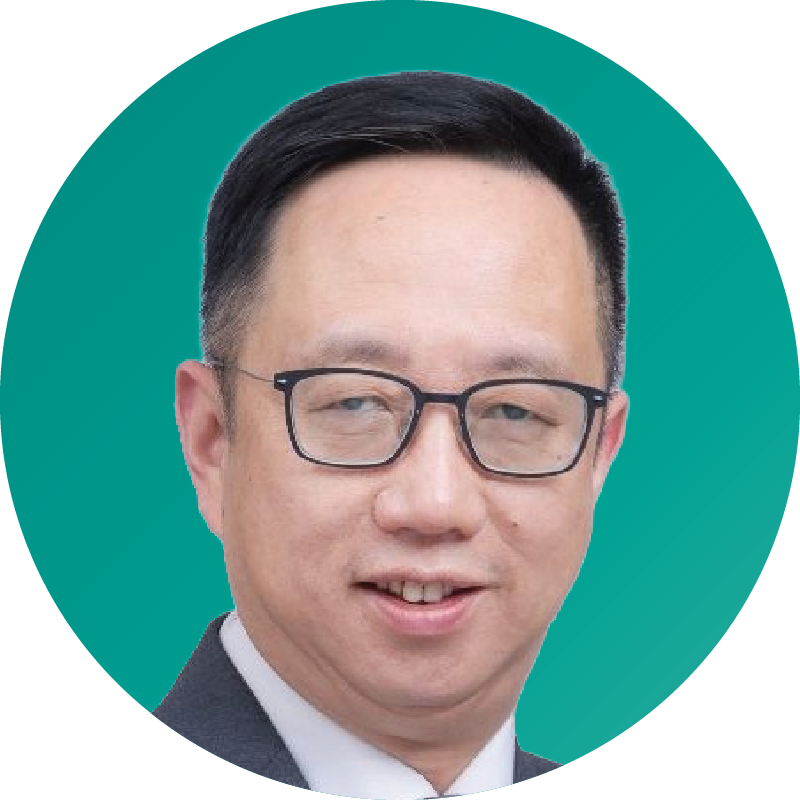
Professor Yan, Zi
晏子教授
RGC Senior Research Fellow, Professor and Head of Department of Curriculum and Instruction, Executive Co-Director, Centre for Excellence in Learning and Teaching, The Education University of Hong Kong
香港教育大學課程與教學學系主任、教授,香港研究資助局高級研究學者,卓越教學發展中心聯席執行總監
Abstract 摘要
This talk re-examines the role of adaptive learning in K–12 education and assesses the challenges and opportunities introduced by AI technologies. We highlight two complementary forms of adaptivity—system adaptivity (how platforms respond and adjust) and learner adaptivity (how learners self-regulate and engage)—and examine their interaction within contemporary digital learning environments. We introduce EASE (Efficient Adaptive System for Education), an integrated adaptive learning platform designed for Hong Kong’s K–12 context. Aligned with the local curriculum, EASE combines AI-driven assessment and pedagogical tools to support student-centred, personalised learning at scale. Key capabilities include adaptive content sequencing and individualised learning pathways, automatic item generation and grading, and targeted error-analysis tools that surface actionable insights for teachers and learners. EASE aims to reduce teacher workload through intelligent automation, enabling educators to devote more time to pedagogy and learner support, while empowering students with customised learning experiences that promote mastery and self-regulated learning. We discuss implementation considerations and how such systems can advance the goal of “teaching according to aptitude.” The talk concludes with practical recommendations for deploying adaptive AI systems in schools to maximise learning impact while safeguarding fairness, transparency, and teacher agency.
本講座重新檢視自適性學習在K–12教育中的角色,並評估由人工智能技術帶來的挑戰與機遇。我們突顯兩種互補的適應性形式──系統適應性(平台如何回應與調整)與學習者適應性(學習者如何自我調節與參與)──並探討它們在當代數碼學習環境中的互動關係。本講座介紹EASE(Efficient Adaptive System for Education),一個為香港K–12環境設計的整合式自適性學習平台。EASE緊扣本地課程,結合AI驅動的測量與教學工具,以支持大規模的學生為本、個人化學習。主要功能包括自適性內容排序與個人化學習路徑、自動試題生成與批改,以及提供能支援教師和學習者的錯誤分析工具。EASE旨在透過智能化和自動化減輕教師工作負擔,使教育工作者能投入更多時間於教學設計與學習支持,同時促進學生的自我調節學習和提升個人化學習體驗。我們討論在實際環境中此類系統如何推進「因材施教」的目標。講座最後提出在學校部署自適性AI系統的建議,以在保障公平性、透明度與教師自主性的同時,最大化學習成效。
Speaker Bio| 講者簡介
Professor Zi Yan is a Hong Kong RGC Senior Research Fellow and the Head of the Department of Curriculum and Instruction at The Education University of Hong Kong. He also holds the position of Honorary Professor at the Centre for Research in Assessment and Digital Learning at Deakin University. His primary research interests focus on educational assessment in both school and higher education contexts, as well as Rasch measurement. Professor Yan is the author of Student Self-Assessment as a Process for Learning (Routledge, 2022) and Applying the Rasch Model: Fundamental Measurement in the Human Sciences (4th ed.) (Routledge, 2020). Professor Yan is the President of the Pacific Rim Objective Measurement Society and serves as Associate Editor for the journals Educational Psychology, Computers & Education Open and IEEE Transactions on Learning Technologies. Over the past decade, he has conducted more than 100 training and professional development workshops on assessment and measurement for schools, organisations, and institutes both locally and internationally.
晏子教授是研資局高級研究學者,香港教育大學課程與教學學系系主任。他亦是澳洲迪肯大學評估與數字學習研究中心名譽教授。他的研究主要集中在兩個相關領域:學校和高等教育環境中的教育評估,以及Rasch測量。晏教授的主要著作包括Student Self-Assessment as a Process for Learning (Routledge, 2022) 以及Applying the Rasch Model: Fundamental Measurement in the Human Sciences (4th ed.) (Routledge, 2020)。晏教授是泛太平洋地區客觀測量學會主席,亦是Educational Psychology, Computers and Education Open, IEEE Transactions on Learning Technologies三份國際期刊副主編。除了研究工作之外,晏教授在知識轉移、教師培訓和學校支援方面亦擁有多年經驗。他為香港、澳門、中國大陸和海外的校長和教師舉辦了超過 100 場有關評估和/或測量的專業發展工作坊。
Moderator 主持人
Professor Li, Hui
李輝教授
Assistant Vice President (Regional Outreach), Chair Professor of Early Childhood Education, Associate Co-Director of Academy for Educational Development and Innovation, Director of AI, Brain and Child Research Centre, Executive Co-Director of Centre for Excellence in Learning and Teaching, The Education University of Hong Kong
香港教育大學助理副校長(區域拓展),幼兒教育講座教授,教育發展與創新學院聯席副院長,人工智能、腦與兒童研究中心總監,卓越教學發展中心聯席執行總監

10:05 AM – 10:30 AM
Industry Sharing
行業分享
Embodied Intelligence Advancement: Practical Application of Humanoid Robots in All Educational Scenarios
具身智能進階:人形機器人在教育全場景的落地實踐
Dr Zheng, Fan
鄭帆博士
Senior Director of Curriculum and Research, UBTech
高級教研總監,優必選(UBTech)
Abstract 摘要
With the leapfrog development of embodied AI technology, humanoid robots are moving beyond the laboratory and into the physical world. This presentation will focus deeply on the education sector, analyzing how embodied AI empowers the transformation of traditional teaching models. Drawing on front-line practical experience, I will showcase real-world use cases of humanoid robots across various educational scenarios, including instructional assistance and campus services. By discussing the technical paths and challenges of hardware-software integration, this session aims to provide a referenceable roadmap for the advancement of embodied AI and collectively explore the future of smart education.
隨着具身智能 (Embodied AI) 技術取得突破性發展,人型機械人正走出實驗室,步入真實物理世界。今次分享將深度聚焦教育領域,解析具身智能如何賦能傳統教學模式轉型。本次演講將結合一線實戰經驗,重點展示人型機械人在教學輔助、校園服務等教育全場景中的真實落地案例。透過探討軟硬件融合的技術路徑與挑戰,今次演講旨在為行業提供具身智能進階的可參考路徑,共同探索智慧教育的未來形態。

Moderator 主持人
Professor Xu, Guandong
徐貫東教授
Assistant Vice President (Artificial Intelligence and Education Innovation), Chair Professor of Artificial Intelligence, Director of University Research Facility of Data Science and Artificial Intelligence, The Education University of Hong Kong
香港教育大學助理副校長(人工智能與教育創新),人工智能講座教授,數據科學與人工智能中心實驗室總監

10:30 AM – 10:55 AM
Invited Talk
特邀演講
Enhancing students’ emotional well-being through an AI-powered app – EmoCare
通過一款由人工智能驅動的應用程序提升學生的情緒健康——EmoCare
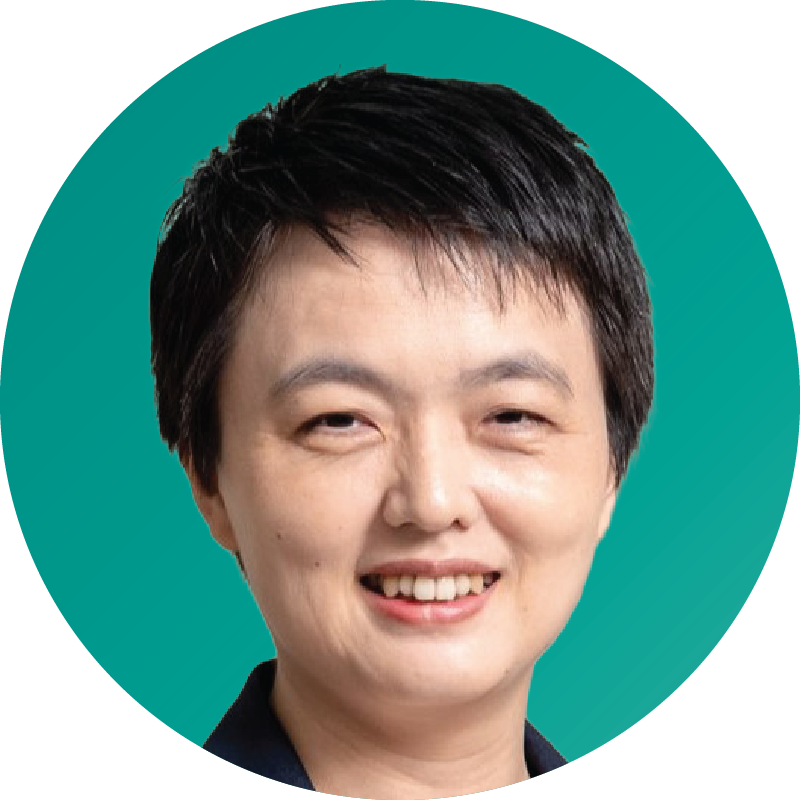
Professor Song, Yanjie
宋燕捷教授
Professor of Department of Mathematics and Information Technology, Associate Co-Director of Academy for Applied Policy Studies and Education Futures, Associate Director of Centre for Excellence in Learning and Teaching, The Education University of Hong Kong
香港教育大學數學與資訊科技學系教授,應用政策研究及教育未來學院聯席副院長,卓越教學發展中心副總監
Abstract 摘要
To address the critical issue of students’ emotional well-being, our team developed EmoCare, a web-based application that enhances traditional journaling through Large Language Models (LLMs), AI-generated imagery using the PERMA positive psychology model as a theoretical framework. Unlike generic digital journals, EmoCare provides personalised support through customisable image generation, interactive dialogue with an AI companion, and emotion tracking to guide students in emotional regulation. Multi-round trials with over 700 students, ranging from primary to tertiary and Special Educational Needs (SEN) levels, demonstrate that the PERMA-integrated system significantly outperforms standard LLMs in fostering self-understanding and positive emotions. Another key insight is that general students adopted the tool for expressive daily reflection, while SEN students connected through concrete themes of family and achievement. These patterns affirm EmoCare’s role as an effective AI “emotional assistant” that helps stabilise and improve student well being across varied educational contexts.
不同年齡階段的學生情緒健康已成為教育的重要議題。日記書寫長期被視為促進心理健康的有效工具,而人工智能科技的發展亦使日記反思更具互動性。然而,現有電子日記多缺乏針對情緒問題的個人化支持。為回應此需求,我們團隊研發了 EmoCare,一款結合大型語言模型(LLMs)、人工智能生成圖像,並且以 PERMA 正向心理學模型為理論基礎的網頁式情緒健康支援應用程式。系統透過日記反思、AI 對話、情緒追蹤,以及可依個人偏好調整的生成式圖像,引導學生進行情緒調節與正向心理建構。本研究已進行多輪試驗,涵蓋超過 700 名小學生、中學生、大專生及特殊教育需要的學生。結果顯示,整合 PERMA 模型的版本在促進自我理解、提升正向情緒與提供情緒支持方面,均優於僅依賴通用 LLM 的系統應用,並在情緒穩定性與互動體驗上獲得更高評價。一般學生傾向以 EmoCare 進行日常反思,語言表達較為豐富;特殊教育需要的學生則呈現更具體、以家庭與成就為主的書寫內容。研究結果支持 EmoCare 作為促進學生情緒健康的有效人工智能情緒健康「小幫手」。
Speaker Bio| 講者簡介
Professor Yanjie Song is Professor at the Department of Mathematics and Information Technology, Associate Co-Director of the Academy for Applied Policy Studies and Education Futures (AAPSEF), and Associate Director of CELT, The Education University of Hong Kong. She holds a PhD from The University of Hong Kong and an MEd from the University of Leeds. Her research spans AR, VR, the metaverse, AI in education, and multimodal learning analytics. She has led the development of award-winning platforms including VocabGo, Learningverse, LearningverseVR, Embodyverse, EmoCare, and iChat, with multiple patents secured. Prof Song has received competitive research funding and holds leadership roles in APSCE. She is listed among the world’s top 2% most-cited scientists by Stanford University.
宋燕捷教授現為香港教育大學數學與資訊科技學系教授、應用政策研究與教育未來學院(AAPSEF)協理副院長,教與學中心(CELT)副總監。她於香港大學取得博士學位,並於英國里茲大學取得教育碩士學位。她的研究領域涵蓋擴增實境(AR)、虛擬實境(VR)、元宇宙、教育中的人工智慧,以及多模態學習分析。她主導研發多個屢獲殊榮的平台,包括 VocabGo、Learningverse、LearningverseVR、Embodyverse, EmoCare, and iChat,並已獲得多項專利。宋教授獲得多項外部和內部研究資助,並在亞太教育計算學會(APSCE)擔任領導職務。她於近幾年入選美國史丹福大學全球排名首2%高引用學者名單。
Moderator 主持人
Dr Fu, Hong
傅弘博士
Associate Director of Centre for Learning, Teaching and Technology, Associate Professor of Department of Mathematics and Information Technology, The Education University of Hong Kong
香港教育大學教學科技中心副總監,數學與資訊科技學系副教授

11:05 AM – 11:30 AM
Industry Sharing
業界分享
Reflections and Practices on the Application of Artificial Intelligence in Teaching Scenarios
人工智能在教學場景的應用思考與實踐
Mr Shi, Caoli
史曹力先生
Solution Director of Seewo K12 Business Unit, Director of Teacher Development Department of Guangdong Xingtan Smart Education Innovation Research Institute
希沃K12事業部解決方案總監,廣東省杏壇智慧教育創新研究院教師發展部主任
Abstract 摘要
In the era of AI, how should we re-interpret the classroom? How can data effectively support learning diagnostics, lesson preparation, and precision evaluation? We explore educational pathways for the mutual growth of teachers and students—empowering every teacher to unlock the potential of personalised instruction, and ensuring every child is seen and understood.
AI時代,我們如何重新解讀課堂?數據如何有效支撐學情診斷、課前備課、精準評估?探索師生共同成長的教育路徑,讓每位教師開啟因材施教的可能性,讓每個孩子被看見、被理解。
Speaker Bio| 講者簡介
With 9 years of expertise in teacher education, he has spearheaded the development of a learning platform utilised by over 10 million teachers. He currently serves as the Solution Director of the K12 Business Division at Seewo and the Director of the Teacher Development Department at the Guangdong Xingtan Institute of Intelligent Education Innovation.
9年教師教育領域經驗,建構超1000萬教師使用的學習平台。現任希沃K12事業部解決方案總監,廣東省杏壇智慧教育創新研究院教師發展部主任。

Moderator 主持人
Dr Yang, Yu
楊宇博士
Assistant Professor of Centre for Learning, Teaching and Technology and Department of Mathematics and Information Technology, The Education University of Hong Kong
香港教育大學教學科技中心及數學與資訊科技學系助理教授

11:30AM – 12:00 PM
Invited Talk
特邀演講
The Research Panorama: Evolution and Frontiers of AI in Education
AI教育研究全景圖—演進脈絡與前沿
Dr Sun, Daner
孫丹兒博士
Associate Professor and Associate Head of Department of Mathematics and Information Technology, Associate Co-Director, Global Institute for Emerging Technologies, The Education University of Hong Kong
香港教育大學數學與資訊科技學系副主任、副教授,全球新興技術研究所副聯席總監
Abstract 摘要
This talk maps AI in education’s evolution through literature review and representative studies. It traces three paradigms: AI-directed (learner as recipient), AI-supported (learner as collaborator), and AI-empowered (learner as leader). Examining human-AI relationship shifts from rule-based systems to generative AI-driven collaboration, it foregrounds Human-Centered AI (HCAI) augmenting rather than replacing humans. The talk examines triadic interactions among teachers, students, and AI in learning environments. It concludes teacher competency frameworks (Intelligent-TPACK, GenAI-responsive) and five student-AI collaboration modes: tutoring, co-creating, processing, coaching, and simulating.
本講座基於系統的文獻梳理與實證研究,勾勒人工智能應用教育的演進脈絡與發展格局。研究揭示AI教育應用歷經三大核心範式:AI導向範式下,學習者作為知識接收者;AI支持範式中,學習者轉變為與智慧系統協同的參與者;AI賦能範式則強調學習者在人機協同中發揮主導作用。講座深入剖析人機關係從早期規則驅動系統到生成式AI協作模式的範式遷移,並聚焦人本人工智能這一核心理論立場,強調技術設計的根本在於增強而非替代人類智慧。講座進一步解析智能學習環境中的三元互動結構,系統介紹教師智能素養框架(智能TPACK、生成式AI回應能力),並提出學生-AI協作的五種典型交互形態:智慧輔導、知識共創、資訊處理、學習教練與情境模擬。
Speaker Bio| 講者簡介
Dr. Sun Daner is Associate Professor and Associate Head in the Department of Mathematics and Information Technology at The Education University of Hong Kong (EdUHK). She also serves as Associate Co-Director of the university’s Global Institute for Emerging Technologies. Holding a PhD in Science Education, she completed a postdoctoral fellowship at the Learning Sciences Lab, Nanyang Technological University, Singapore, and furthered her leadership training at Harvard University in 2025. Her research focuses on artificial intelligence in education, emerging technologies, science education, and STEM education. As Principal Investigator for RGC General Research Fund projects, she has contributed significantly to technology-enhanced learning in STEM education. She has published over 80 journal articles, the majority of which appear in SSCI-indexed leading journals. Dr. Sun serves as Editor-in-Chief for Research and Practice in Technology Enhanced Learning, and as Associate Editor for Education and Information Technologies and Educational Technology & Society. She is also on the editorial boards of Technology, Pedagogy and Education, Journal of Research in Science Teaching, and Journal of Science Education and Technology. Her contributions have earned her several accolades, including the President’s Award for Outstanding Performance in Research: Early Career Research Excellence Award (2022/23), the APSCE Early Career Researcher Award (2022), and the President’s Award for Outstanding Performance in Knowledge Transfer (Team Award) (2019/20). Actively engaged in academic leadership, Dr. Sun served as International Program Committee Chair for GCCCE 2025 and is a member of the Executive Committee of the Asia-Pacific Society for Computers in Education.
孫丹兒博士現為香港教育大學數學與資訊科技系副教授兼副系主任,以及全球新興技術研究所聯席副總監。她曾於新加坡南洋理工大學從事博士後研究,並於2025年完成哈佛大學教育學院管理課程。孫博士專注於人工智能教育、新興技術、科學教育及STEM教育,她主持多項AI賦能STEM教育的研究項目,在SSCI期刊發表論文80餘篇。

Moderator 主持人
Dr Gary Cheng
鄭國城博士
Director of Centre for Learning, Teaching and Technology, Associate Co-Director of Global Institute for Emerging Technologie, Executive Co-Director of AI, Brain and Child Research Centre, Associate Professor of Department of Mathematics and Information Technology, The Education University of Hong Kong
香港教育大學教學科技中心總監,全球新興技術研究所聯席副院長,人工智能、腦與兒童研究中心執行聯席總監,數學與資訊科技學系副教授
12:00 PM – 02:00 PM |
Lunch Break | 午餐時間 |
02:00 PM – 05:00 PM |
PM Session | 下午時段 |
02:00 PM – 02:25 PM
Keynote Speech
主旨演講
The Future of Education in the Age of Generative Artificial Intelligence
生成式人工智能時代的教育未來
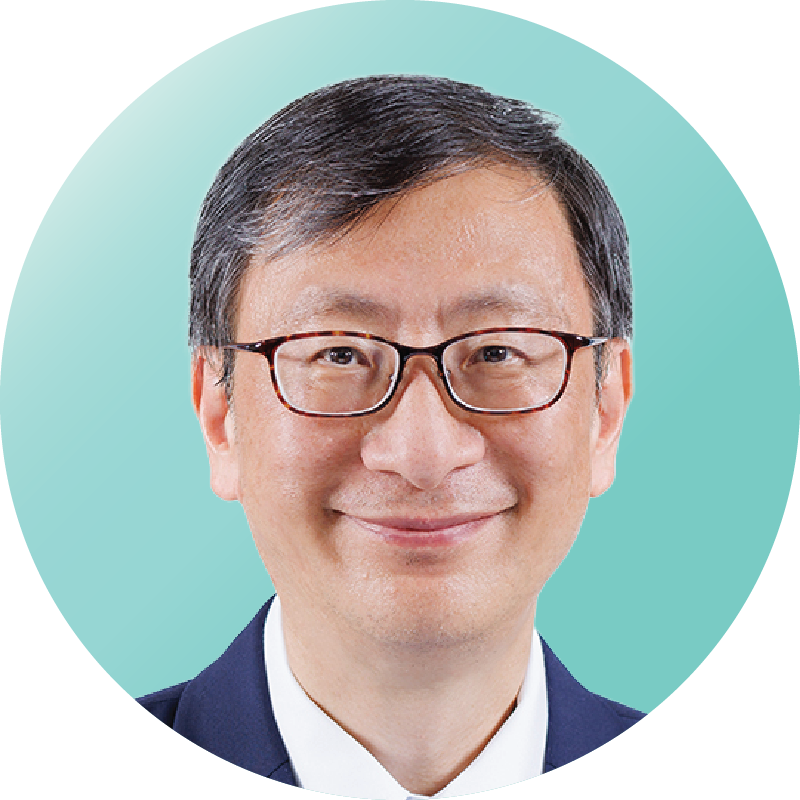
Professor Lee, Chi-Kin John
李子建教授
President, Chair Professor of Curriculum and Instruction, Director of Academy for Applied Policy Studies and Education Futures, Director of Academy for Educational Development and Innovation, The Education University of Hong Kong
香港教育大學校長、課程與教學講座教授、應用政策研究及教育未來學院院長、教育發展與創新學院院長
Abstract 摘要
This presentation primarily explores the future prospects of education in the era of generative artificial intelligence. It begins by reviewing future development trends, including rising global demand for problem-solving, changing job skills, and an emphasis on lifelong learning, analyzing the profound impact of AI on the learning environment from an educational perspective. Next, the presentation elucidates the concept of AI literacy, covering understanding its basic functions, practical applications, assessment and creation, and ethical considerations, emphasising its core role in education to address the rapidly evolving technological landscape. The presentation further discusses student-centred educational strategies, from foundational to higher education, promoting human-machine collaboration models to facilitate personalised learning and skills development. Looking towards the future of education, the presentation outlines immersive learning environments, intelligent teaching methods, multi-dimensional assessment approaches, and related ethical challenges such as privacy protection and fairness. Finally, the presentation introduces a series of practices at the Education University of Hong Kong, including AI and digital competence strategies, landmark AI innovations, and the International AI and Education Consortium.
本演講主要探討生成式人工智能時代教育的未來前景。演講首先回顧未來發展趨勢,包括全球問題解決需求上升、工作所需技能轉變以及終身學習的強調,並從教育視角分析人工智能對學習環境的深刻影響。其次,演講闡述人工智能素養的概念,涵蓋理解其基本功能、實際應用、評估與創造以及倫理考量等方面,強調其在教育中的核心作用,以應對技術快速演進的變化。演講進一步討論針對學生的教育策略,從基礎階段到高等教育,推動人機協作模式,促進個人化學習和能力培養。展望教育未來,演講描繪沉浸式學習環境、智能化教學形式、多維度評估方法以及相關倫理挑戰,如隱私權保護與公平性。演講最後介紹了香港教育大學的一系列實踐:包括人工智能與數位能力策略、標誌性人工智能創新和國際人工智能與教育聯盟等。
Speaker Bio| 講者簡介
Professor John Lee Chi-kin’s research interests encompass curriculum and instruction, geography and environmental education, life and values education, and teacher development and school improvement. He has actively led numerous educational research and development projects and has a proven track record of securing substantial external grants. Professor Lee’s scholarly work is widely cited; he was recognised by Stanford University in its 2025 report as being among the world’s top 1% of most-cited scientists. He is also a Fellow of the Hong Kong Association for Primary Education Research. Professor Lee is actively involved in local, mainland, and international educational and community services. He has served as a visiting, guest, or adjunct professor at various universities in the Mainland and overseas, and was awarded the title of Changjiang Scholar Chair Professor by the Ministry of Education of the People’s Republic of China. He has served as a member of the Academic Committee of the Guangdong-Hong Kong-Macao Greater Bay Area Primary and Secondary School Principals’ Federation and as the Director of the Academic Committee of the Centre for Hong Kong and Macao Studies at South China Normal University, among other roles. Furthermore, he was appointed as a Justice of the Peace by the Government of the Hong Kong Special Administrative Region. Professor Lee is a member of the 14th National Committee of the Chinese People’s Political Consultative Conference (CPPCC). He has been honoured as the UNESCO Chair in Regional Education Development and Lifelong Learning (2019–2023; 2023–2027) and serves as a SEAMEO Fellow (Southeast Asian Ministers of Education Organisation). Concurrently, he serves as the Dean of the Academy of Applied Policy Research and Educational Futures, the Dean of the Academy for Educational Development and Innovation, and the Director of the Centre for Religious and Spirituality Education at The Education University of Hong Kong.
李子建教授的研究範圍涵蓋課程與教學、地理與環境教育,生命與價值教育,以及教師發展與學校改進。他積極帶領教育研究及發展項目,過往成功取得不少校外撥款。李教授的學術文獻廣獲徵引,入選美國史丹福大學2025年發布的全球排名首1%科學家名單。他也是香港初等教育研究學會院士。李教授積極參與本地、國內及海外教育及社會服務,曾出任內地及海外多所大學的訪問、客座或兼任教授,同時獲內地教育部頒佈長江學者講座教授名銜。他曾擔任粵港澳大灣區中小學校長聯合會學術委員會成員,以及華南師範大學港澳研究中心學術委員會主任等。此外,他獲香港特別行政區政府委任為太平紳士。李教授為第十四屆全國政協委員,並榮獲「聯合國教科文組織區域教育發展與終身學習教席」(二零一九至二零二三年;二零二三至二零二七年),另兼任「東南亞教育部長組織研究員」。同時,他擔任教大應用政策研究及教育未來學院院長、教育發展與創新學院院長、及宗教教育與心靈教育中心總監。

Moderator 主持人
Professor Wang, Minjuan
王敏娟教授
Assistant Vice President (Interdisciplinary Studies and Partnership), Chair Professor of Emerging Technologies and Future Education, Associate Co-Director of Academy for Applied Policy Studies and Education Futures, Co-Director of Global Institute for Emerging Technologies, The Education University of Hong Kong
香港教育大學助理副校長(跨學科與夥伴協作)、新興科技與未來教育講座教授、應用政策研究及教育未來學院聯席副院長、全球新興技術研究所聯席總監
02:45 PM – 3:30 PM
Keynote Speech
主旨演講
Educational Development and Transformation in the Intelligent Era
智能時代的教育發展與變革
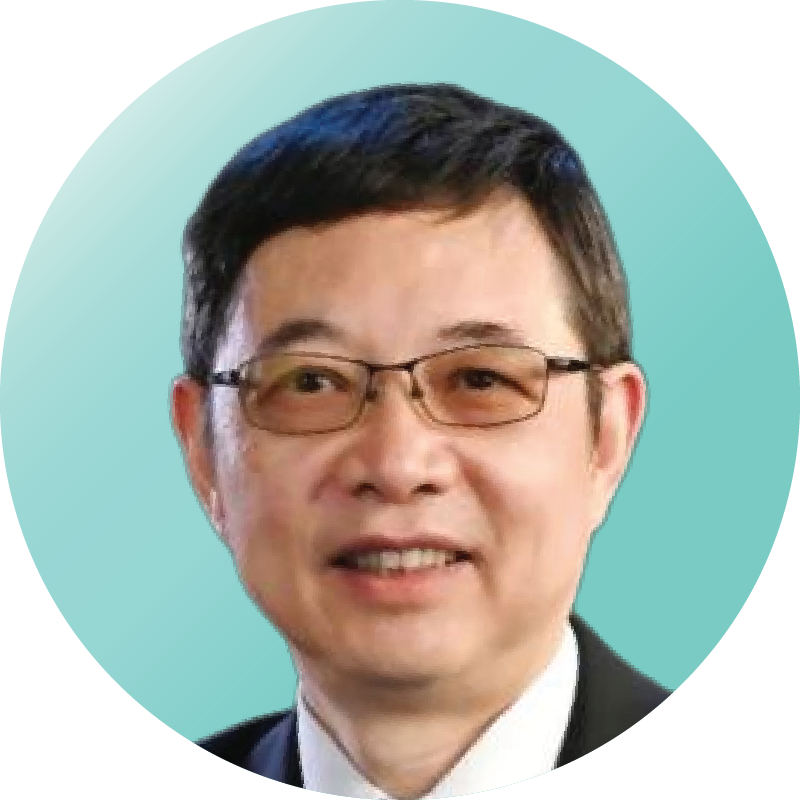
Professor Yang, Zongkai
楊宗凱教授
Chair Professor of Central China Normal University
華中師範大學資深教授
Abstract 摘要
The rapid advancement of Artificial Intelligence (AI) has unlocked infinite possibilities for innovation and transformation in education. In the intelligent era, it is essential to reshape talent cultivation models and develop competency-based education. This report elucidates the impact of AI and other emerging technologies on education, introduces national strategic actions and initiatives regarding AI in education, and shares research and practical insights into how AI empowers teaching, learning, and professional teacher development. Finally, the report offers perspectives and an outlook on the future of AI in education: we will orient ourselves toward “Four Futures,” exploring new pathways for educational reform to co-create a bright future for smart education.
人工智能技術發展迅猛,為教育創新變革開闢了無限可能。智能時代需要重塑人才培養模式,打造以能力為本的教育。本報告闡述了人工智能等技術對教育領域的影響,介紹了國內人工智能教育相關的戰略行動與舉措,並分享了人工智能賦能教育教學、教師專業發展等方面的研究與實踐。最後,報告就人工智能教育的發展提出觀點與展望:我們將面向「四個未來」,探索教育變革新路徑,共創智慧教育的美好前景。
Speaker Bio| 講者簡介
Yang Zongkai, Ph.D., is a chair professor and doctoral supervisor at Central China Normal University (CCNU). He is currently Chair of the Expert Advisory Committee on Educational Digitalization of the Ministry of Education, Chair of the Steering Committee on Teaching Informatization and Pedagogical Innovation of Higher Education Institutions of the Ministry of Education, and President of the China Educational Technology Association.
楊宗凱,博士,華中師範大學資深教授,博士生導師,教育部教育數字化專家諮詢委員會主任委員,教育部高等學校教學資訊化與教學方法創新指導委員會主任委員,中國教育科技協會會長。
Moderator 主持人
Professor Xu, Guandong
徐貫東教授
Assistant Vice President (Artificial Intelligence and Education Innovation), Chair Professor of Artificial Intelligence, Director of University Research Facility of Data Science and Artificial Intelligence, The Education University of Hong Kong
香港教育大學助理副校長(人工智能與教育創新),人工智能講座教授,數據科學與人工智能中心實驗室總監

04:00 PM – 04:50 PM
Panel Discussion
專題討論
Chair 主席
Prof Yeung, Siu Sze Susanna
楊少詩教授
Associate Vice President (Quality Assurance), Professor of Department of Psychology, Executive Co-Director of Academy for Educational Development and Innovation, The Education University of Hong Kong
香港教育大學協理副校長(學術質素保證)、心理學系教授、教育發展與創新學院聯席執行院長
Chair 主席
Professor Yan, Zi
晏子教授
RGC Senior Research Fellow, Professor and Head of Department of Curriculum and Instruction, Executive Co-Director, Centre for Excellence in Learning and Teaching, The Education University of Hong Kong
香港教育大學課程與教學學系主任、教授,香港研究資助局高級研究學者,卓越教學發展中心聯席執行總監

Panellist 討論嘉賓
Dr Yang, Lan Joy
楊蘭博士
Harnessing the power of AI-assisted feedback to supporting learning: A perspective of students’ feedback orientation to AI-assisted feedback
利用人工智能輔助反饋來支持學習:以學生對人工智能輔助反饋為視角
Co-Director, Institute of Special Needs and Inclusive Education (ISNIE), Associate Head and Associate Professor of Department of Curriculum and Instruction, The Education University of Hong Kong
香港教育大學課程與教學學系副系主任、副教授,特殊需要與融合教育研究所聯席總監

Panellist 討論嘉賓
Dr Ba, Shen
巴深博士
Community of inquiry in motion: Modeling inquiry dynamics with movement analysis (MOVA)
動態探究共同體:利用運動分析(MOVA)對探究動態進行建模
Assistant Professor of Department of Curriculum and Instruction, The Education University of Hong Kong
香港教育大學課程與教學學系助理教授

Panellist 討論嘉賓
Dr Kason Cheung
張家政博士
Multimodal GenAI in K-12 Science Education
K-12科學教育中的多模態生成式人工智能
Assistant Professor of Department of Curriculum and Instruction, The Education University of Hong Kong
香港教育大學課程與教學學系助理教授
04:50 PM – 05:00 PM |
Closing |